

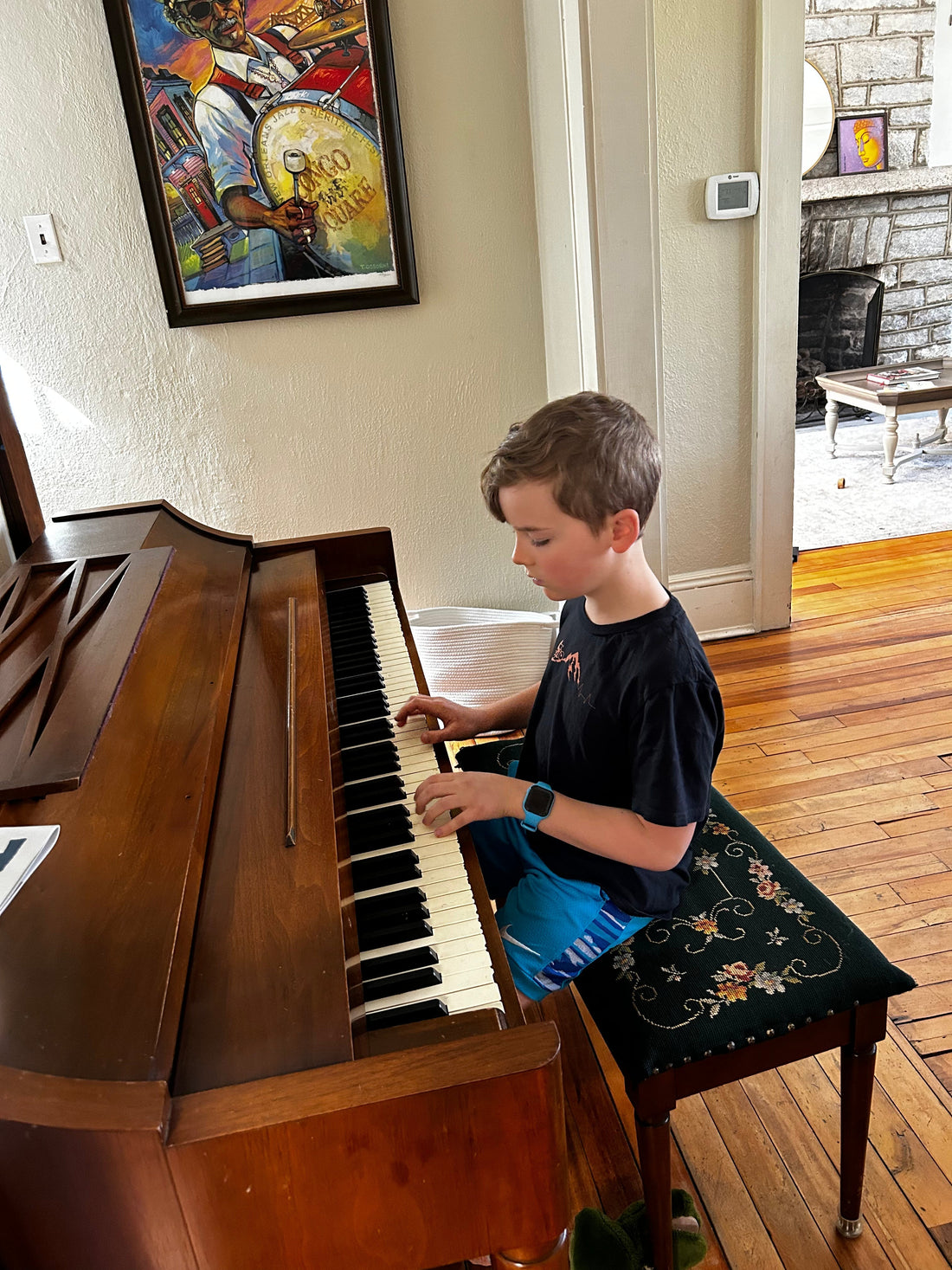
There's a music teacher in almost every town who never seems to have openings.
The waitlist has a waitlist. Families refer friends without being asked. Students stay for years. And somehow, no ads are running, they aren't posting every day and they don't seem to be hustle-grinding their way to a full roster.
What do they know that others don't?
I've spent a lot of time thinking about this from the other side of the studio door. As a music parent, I've sat in the waiting room. I've filled out the enrollment forms. I've been the parent wondering if we made the right choice, And I've also been the parent who texted three friends about a teacher before our second lesson.
The difference isn't talent. It isn't even experience.
It's trust. And trust starts before the first lesson.
The Statistic That Should Change How You Onboard
Here's the number that may surprise you: 50% of music students quit within their first two years of lessons. (Source: multiple longitudinal studies, 2021–2025.)
Almost none of them quit because of the teaching.
They quit because of the experience. The feeling of not quite belonging. The uncertainty that was never resolved. The silence between enrollment and lesson one that nobody filled with anything warm.
Here's the other number: it costs 5x more to find a new student than to keep an existing one. (Harvard Business Review.) Most studios are unknowingly filling a leaky bucket - filling from the top, losing from the bottom, and wondering why growth feels so hard.
One more: 70% of people will refer a company if the onboarding experience is superior. Not because someone asked them to. Because they couldn't help it.
The teachers with full studios didn't stumble into this. They built something (often without consciously naming it) that makes families feel like they made exactly the right choice.
The Window Some Studios Leave Empty
Between the day a family enrolls and the day they walk through your door for lesson one, something important is happening.
They're forming an impression.
Not of your teaching... they haven't seen your teaching yet. They're forming an impression of you as a person, of your studio as a community, of whether this was the right call.
Most studios leave that window completely empty. An invoice. Maybe a "see you Tuesday." And then silence.
The families that receive nothing in that window are the ones who show up on the first day still uncertain. A little skeptical. Not yet invested. They're easier to lose.
The families that receive something - something warm, something useful, something that says we've been thinking about you, walk in already believing.
That believing is the foundation everything else is built on.
What actually makes families stay
The 3 things working quietly in the background
The teachers with full studios aren't necessarily better musicians or teachers. They've built something that makes families feel like they belong.
It works in three ways, whether the teacher has named them or not.
They show up with a perspective.
Not just lesson content. A point of view about music, about families, about what it means to start something new. When a teacher shares something that makes a parent think I never thought about it that way, trust deepens. That teacher becomes someone worth listening to and not just someone to schedule.
They deliver something before the relationship is even established.
The first experience a family has of you sets the tone for everything that follows. A warm welcome email. A practice guide they can actually understand and use. A personal introduction that tells them who you are before you've played a note together. When that first experience is generous and thoughtful, families don't just feel welcomed, they feel confident. And confident families stay.
They stay connected between lessons.
The teachers who lose students rarely lose them because of the lessons themselves. They lose them in the quiet spaces between lessons, when families feel unsupported or unsure. A check-in email. A practice tip. Something that says we're still thinking about your student, even on the days you don't see us.
That ongoing connection is what transforms a series of lessons into a relationship.
None of this requires more hours. It requires intention and the right tools in place.
What Professional Onboarding Can Look Like
Let's get specific here, because "be more thoughtful" isn't a system.
Here's what a complete new student welcome experience includes:
- A warm welcome email sent within 24 hours of enrollment. Not a receipt. Not a scheduling confirmation. A real note that says: you made the right choice, here's what to expect, and we're glad you're here.
- An instrument-specific student welcome guide that covers what lessons will look like, how to practice, what styles they might explore, and what parents can do to support practice at home between lessons. Designed well enough that parents screenshot it and send it to family.
- A Meet the Teacher introduction that tells your story - what you teach, what you believe about music, what students can expect from you. Families read this before lesson one and feel like they already know you.
- A Practice Guide so parents aren't guessing. Most parents desperately want to support their child's progress. They just don't know how. Give them a framework and they become your biggest ally.
- A consistent follow-up email sequence that stays connected between enrollment and that first lesson, and keeps the relationship warm in the weeks that follow.
That's not an overwhelming list. It's a system. And you set it up once.
The Math that Makes This Obvious
Let's say you enroll 50 students per year. At the industry average 50% dropout rate, you lose around 25 students within the first two years.
If better onboarding improved your retention by just 10%, you'd keep 3 additional students through their second year.
At $150/month over 24 months, that's
$10,800in retained revenue, without spending a single dollar on new student acquisition.
You can pick up the entire system via your instrument specific student welcome Prelude Collection right here, and it pays for itself the first month. After that, it's just more students who stay, more families who refer their friends, and more of the kind of studio you actually want to run.
The Highest-Leverage Moment in Early Retention
If I had to point to the single most important thing a teacher can do after enrollment, it's this: send a real welcome email before the first lesson.
Not the invoice. Not the scheduling confirmation. The first real communication... the one that says: you made the right choice. We're glad you're here. Here's what to expect.
That email does more for retention than almost anything else. It's the moment a family goes from uncertain to invested. From wondering if they belong here to knowing they do.
The problem is most teachers have never written one. Or they wrote something once years ago that doesn't quite reflect who they are now. Or they know they should do this but they've never gotten around to actually building the system.
That's exactly why I put together two free welcome emails you can start using today. Not templates in the generic sense - actual emails, written in a warm voice, that you can customize in 10 minutes for your studio and send to every new family.
They're free. They're ready to use. And they're the beginning of exactly the kind of first impression that keeps families around long enough to become your biggest advocates.
→ Get the two free welcome emails
From Free Emails to a Complete Welcome System
The free emails are a real starting point. But if you want to give every new family a complete experience: the welcome guide, the practice tools, the meet the teacher page, the follow-up emails, all of it... that's what the Prelude Collection is.
It's an instrument-specific welcome system built for music teachers who want to look as polished as the best studios in town, without spending 40 hours designing it themselves.
Inside each collection:
- A 9–10 page instrument-specific Student Welcome Guide
- A Meet the Teacher page (your story, your way)
- Practice and Goal Setting Guides for students and parents
- The Overture Email Series: 5 ready-to-send welcome emails
Available for piano, guitar, voice, violin, cello, and drums.
Use it with your next 3 families. If the relationship doesn't feel stronger or the experience doesn't go better than anything you tried before, email me and I'll make it right.
Explore the Prelude CollectionsFrequently Asked Questions
What should I send new music students before their first lesson?
At minimum, send a warm welcome email within 24 hours of enrollment. Ideally, pair it with an instrument-specific welcome guide, a practice framework for parents, and a brief introduction to you as a teacher. The goal is to move the family from uncertain to confident before they walk through your door.
What is a music student welcome packet?
A welcome packet is a collection of materials given to new students and their families at enrollment or before the first lesson. It typically includes information about what lessons will look like, practice guidance, studio policies, and a personal introduction from the teacher. Done well, it dramatically improves early retention and generates referrals without asking.
Why do music students quit in the first year?
Research consistently shows that roughly 50% of music students quit within their first two years — and the reason is almost never the quality of teaching. Students most often quit because of unclear expectations, feeling disconnected from the teacher, or a lack of support at home between lessons. Strong onboarding addresses all three of these directly.
How do I improve student retention in my music studio?
Focus on the first two weeks. Send a warm welcome before lesson one. Give families a practice framework so they feel equipped at home. Follow up in the weeks after enrollment with check-ins and encouragement. The teachers with the highest retention aren't doing more - they're doing these specific things consistently.
What's included in the Prelude Collection?
Each Prelude Collection includes an instrument-specific Student Welcome Guide (9–10 pages), a Meet the Teacher page, Practice and Goal Setting Guides, and the Overture Email Series (5 ready-to-send welcome emails). Available for piano, guitar, voice, violin, cello, and drums.
How long does it take to set up the Prelude Collection?
You can have it fully customized and ready to use within 20–30 minutes in Canva. The templates are designed to be edited quickly (your name, your photo, your studio details) and used with every new student from that point on.
What's the difference between a welcome packet and a parent handbook?
A welcome packet is instrument-specific and given directly to new students and their families. It covers what to expect, how to practice, and who you are as a teacher. A parent handbook is a studio-wide document that covers policies, expectations, and the parent's role in supporting their child's musical education. They work well together as part of a complete onboarding system.
Here's what I know from the waiting room:
The best music teachers I've encountered didn't just teach beautifully. They made us feel, from the very beginning, like we were somewhere worth being.
That feeling doesn't happen by accident.
It's built - one email, one welcome packet, one thoughtful first impression at a time.
You already teach beautifully. Let your welcome say the same thing.
About Collaborative Endeavor Music
Collaborative Endeavor creates alignment tools for the three-part harmony of teacher, student, and parent. Resources are built from the waiting room perspective. Designed by a music parent who paid attention, for teachers who want every family to feel like they made exactly the right choice.
